


ヘルメットをかぶって、
くらやみへ一歩。
「ちょっと、まって…」
声が、かべにさわった。

| 26/02/07(土)-08(日) | 1N2D | 実施施設: 秋吉台青少年自然の家 集合:新山口・新岩国駅 実施内容: どうくつたんけん (〒754-0302 山口県美祢市美東町赤2128-17/ Tel 0839-62-0581) |
【対象】 小学生中心 【定員】 先着順 20~60名程度 ※一定数で〆切
【集合】 8:00~10:00前後 【解散】 16:00~18:00前後
【引率】 スタッフ2~4名、外国人ボランティアなど4~15名
※上記は、こども20~60名程度の参加者だった場合の目安
【費用】1泊2日 21,500円(税込 23,650円)
※ 現地集合解散の場合は 18,000円(税込19,800円)
子どもゆめ基金助成活動 「キッズアカデミア どうくつのたんけん 2026」のため、通常の1泊2日のお泊まりアカデミアより4,500円減額されていいます。
【主催】キッズたんけんだん
【応募】
| テーマ | プログラム | 内容 |
| テーマ別活動① Theme Activity 1 | どうくつのたんけん | ・景清洞のたて穴やよこ穴のたんけんコースを利用。真っ暗な中ライトを当てながら進むことで、小さな変化や足元の安全を自分で観察したり、怖さを克服したりする力を養う。・「ライトを消してみる」「ひんやり感」「水の音の反響に耳をすましてみる」など、五感をフルに使って自然に触れる。 |
| テーマ別活動② Theme Activity 2 | どうくつのいきもののたんけん | ・暗く静かな環境で、生き物のくらしを学びながら自然の不思議にふれ、探究心や命を大切にする心を育てる。 |
| テーマ別活動③ Theme Activity 3 | どうくつのいきもの | ・コウモリの模型や生態カードヒントなどを利用。 ・コウモリ、オオサンショウウオ、ツバメ、オオゲジ、トビケラ、ホタル等のカードをつかって探究ゲームを実施 |


※ 上記のプログラムイメージは、企画時案です。プログラム内容や進行は変更となることがあります。


🏹 やまのたんけん ✖ ゆみやづくり | Mountain Exploration ✖ Bow Making
日程 | Date: 2025年5月31日(土)〜6月1日(日)
場所 | Location: 国立吉備青少年自然の家 (Okayama)

日程|Date:2025年8月2日(土)〜3日(日)
場所|Location:香々地青少年の家(大分県) / Kakaji Youth House (Oita)

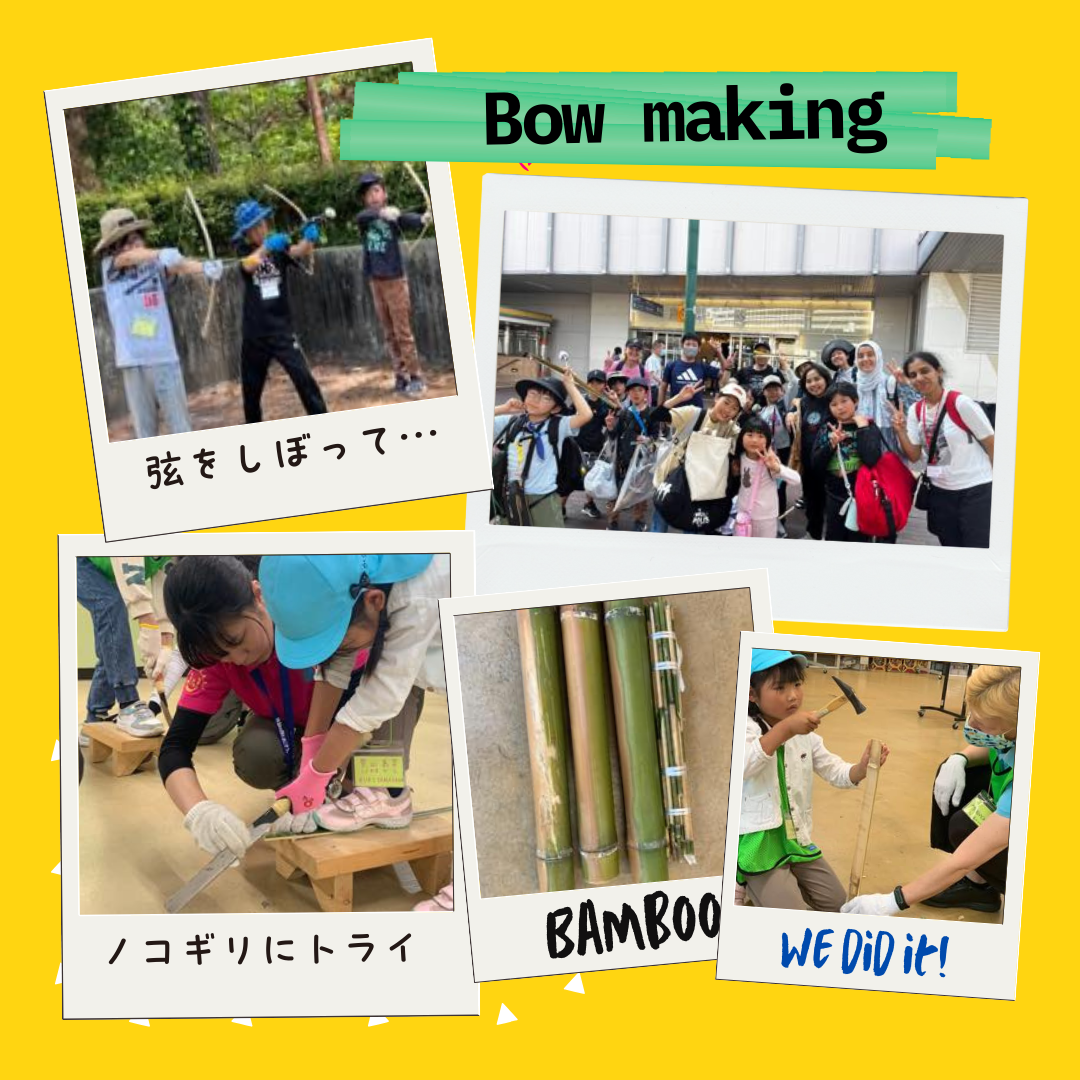
“遊び”の向こうにあった、ほんとうの世界。
Beyond the game, a glimpse of the real world.
今回、私たちが実施しているプログラムは、子どもたちが自然や文化を探検しながら学ぶキッズたんけんだんの活動のひとつ。
その中でも、知的好奇心を育み、国際交流ができる1泊2日の体験型プログラムを「キッズアカデミア事業」と呼んでいます。
This program is part of Kids Ranger, where children explore nature and culture through hands-on learning.
Among these activities, the Kids Academia program is a special two-day experience designed to nurture curiosity and encourage international exchange.
2日目の国際交流プログラムでは、ウクライナ、ミャンマー、中東など、
今も戦争や紛争のまっただ中にいる国から来たボランティアさんたちが、自分の国のことを話してくれました。
昨日まで、一緒に遊んでくれたやさしいお兄さん・お姉さんが、
実は爆撃や争いのある国から来ていると知って、
子どもたちは「えっ…ほんとうに?」と驚いた表情を見せていました。
On the second day, international volunteers from Ukraine, Myanmar, and the Middle East—countries still in the midst of war and conflict—spoke to the children about their lives back home.
The children were surprised to learn that the kind older brothers and sisters who had been playing with them just the day before actually came from places where bombs fall and conflicts continue.
“Really? Is that true…?” they asked, their faces filled with disbelief.
ミャンマーのボランティアさんはこう話してくれました。
「私の国では、数年前に軍が力で国の政治を変えようとして、
それに反対する人たちとのあいだで、今も争いが続いています。
軍と対立している地域では、爆撃や銃声が起こることもありますが、毎日ではありません。
でも、軍に反対する人は捕まってしまったり、自由に動けなくなったりします。
家族のことはとても心配ですが、もし国に戻ったら、
次に国を出ることはもうできないかもしれないのです。」
A volunteer from Myanmar explained:
“In my country, a few years ago the military tried to change the government by force,
and since then, fighting has continued between the military and the people who oppose them.
In some areas, there are bombings and gunfire, but not every day.
However, people who stand against the military are often arrested and lose their freedom.
I worry about my family every day, but if I return home,
I may not be allowed to leave the country ever again.”
ウクライナのボランティアさんも話してくれました。
「私の国は、他の国から攻められていて、ずっと戦争が続いています。
このことは世界中の人が知っているのに、すぐには止めることができません。
ときには、こどもたちが入院している病院が爆撃されることもありました。
ウクライナに残っている友だちや身近な人たちは、何年もずっと傷つき続けています。
爆撃の音で眠れない日を過ごしている人もいます。」
A volunteer from Ukraine also shared:
“My country is being invaded by another country, and the war has been going on for a long time.
People around the world know about it, but still, it cannot be stopped right away.
Sometimes, even hospitals where children are staying have been bombed.
My friends and people close to me who are still in Ukraine have been suffering and getting hurt for years.
Some of them spend nights unable to sleep because of the sounds of bombs.”
明るい笑顔の裏にある本当の現実を知り、子どもたちはじっと黙り込みました。
そして、昨日自分たちが作った竹の弓矢が、
遊びの道具ではなく命を守るため、あるいは戦うための道具として使われている国があることも知りました。
「同じ弓矢でも、国によって意味が全然違うんだね…」
その瞬間、小さな遊びから遠い世界の現実につながりました。
The children, who had only seen the volunteers’ bright smiles, fell silent as they began to understand the real stories behind those smiles.
They also learned that the bamboo bows they made for fun could, in some countries,
be used to protect lives—or to fight in real conflicts.
“The same bow can have a completely different meaning depending on the country…”
In that moment, their small game connected them to the harsh realities of the wider world.
そのあとのアーチェリーゲームでは、勝敗よりも、
「がんばれ!」「ナイスショット!」と声をかけ合いながら挑戦する姿がありました。
飛ばせない子がいると、自然とまわりの子が集まって
「こうすると飛びやすいよ」とアドバイスをしてくれました。
世界の話を聞いたあとの子どもたちの声には、いつもより少しだけ優しさが混じっていました。
During the final archery game, it wasn’t about winning.
The children encouraged each other, shouting,
“Go for it!” “Nice shot!”
When someone couldn’t make their arrow fly, others gathered around and said,
“Try holding it like this—it’s easier!”
After hearing the stories of the world, their voices carried a little more kindness than before.
遊びを通してチームで協力する楽しさを学び、
そして、その遊びが世界のリアルにもつながることを知った1日でした。
Through play, they learned the joy of working together as a team.
And through that same play, they discovered that it can also connect to the realities of the wider world.
“なんで?”から学びがはじまる、キッズアカデミア事業のプログラム。
自然の中で、探検やものづくりを通して考える楽しさを見つけるのがキッズたんけんだんのスタイルです。
さらに、海外ボランティアとの交流を通じて、
新しい視点や簡単な英語にふれ、世界とつながるきっかけも生まれています。
In the Kids Academia program, learning begins with a simple “why?”.
Through exploration and hands-on activities in nature, Kids Ranger helps children discover the joy of thinking.
And with international volunteers, children also gain new perspectives and experience natural moments of global connection.
次回は、また別のプログラムから新しい学びのシーンをご紹介します。
子どもたちの“なんで?”が、どんなふうに広がっていくのか、お楽しみに!
Next time, we’ll share another program with new moments of discovery.
Stay tuned to see how children’s simple “why?” questions can grow into meaningful learning!
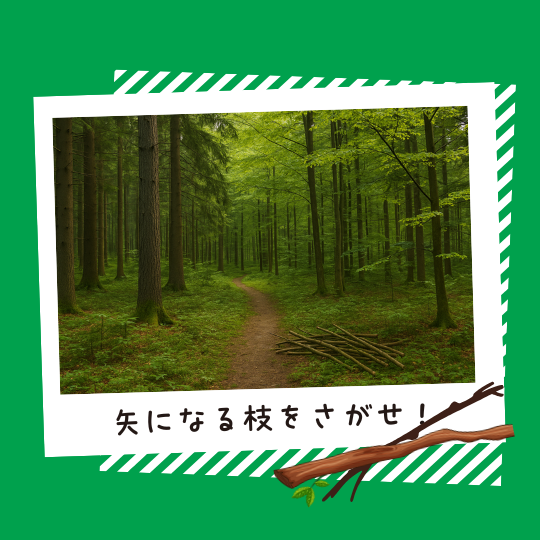
今回、私たちが実施しているプログラムは、子どもたちが自然や文化を探検しながら学ぶキッズたんけんだんの活動のひとつ。
その中でも、知的好奇心を育み、国際交流ができる1泊2日の体験型プログラムを「キッズアカデミア事業」と呼んでいます。
This program is part of Kids Ranger, where children explore nature and culture through hands-on learning.
Among these activities, the Kids Academia program is a special two-day experience designed to nurture curiosity and encourage international exchange.
今回の探検テーマは「矢になりそうな木を探す」。
チームごとに森の中を歩き、あちこちから子どもたちの声が響きます。
「こっちの枝、硬そうだよ!」
「いや、これじゃ太すぎるんじゃない?」
折れやすい木、根腐れした木、飛ばしやすい硬い木…。
どれが正解かはわかりません。だからこそ、みんなで話し合い、試してみるしかないのです。
The challenge in the forest was to find branches that could become arrows.
Each team walked through the woods, and voices echoed everywhere:
“This branch is strong!”
“No, I think this one is too thick!”
Some branches were too soft, some were rotten, and some were just right—but no one knew for sure.
That’s why they had to talk, debate, and try.
海外のボランティアさんも一緒に探検しながら、
**“This is strong!”(これ、強そうだね!)**と英語で声をかけてくれます。
子どもたちも思わず、
**“Look! How about this one?”(見て!これはどう?)**と自然に応えていました。
普段の学校の勉強では出てこない、**森の中での“正解のない選択”**が、チームの中で新しい会話を生み出していました。
International volunteers joined the forest exploration and encouraged the children by saying,
“This is strong!”
The children naturally responded,
“Look! How about this one?”
In the forest, there were no clear answers, and that uncertainty sparked new conversations and teamwork.
うまく飛ばずに悔しがる子もいましたが、
「じゃあ、もっと細いのにしよう」
「こっちの方が軽いかも!」
そんなやりとりを繰り返すうちに、
森の探検は、ただの素材探しではなく考える力を試す冒険へと変わっていきました。
Some children felt frustrated when their arrows didn’t fly well, but they said,
“Let’s try a thinner one.”
“Maybe this one is lighter!”
Through these exchanges, the forest adventure turned from a simple search for materials into an exploration that tested their thinking skills.
“なんで?”から学びがはじまる、キッズアカデミア事業のプログラム。
自然の中で、探検やものづくりを通して考える楽しさを見つけるのがキッズたんけんだんのスタイルです。
さらに、海外ボランティアとの交流を通じて、
新しい視点や簡単な英語にふれ、世界とつながるきっかけも生まれています。
In the Kids Academia program, learning begins with a simple “why?”.
Through exploration and hands-on activities in nature, Kids Ranger helps children discover the joy of thinking.
And with international volunteers, children also gain new perspectives and experience natural moments of global connection.
次回は、海外ボランティアさんとつながる国際交流編。
遊びの延長から“世界のリアル”につながる瞬間をお届けします。
Next time, we’ll share how play led to real moments of global connection with our international volunteers.
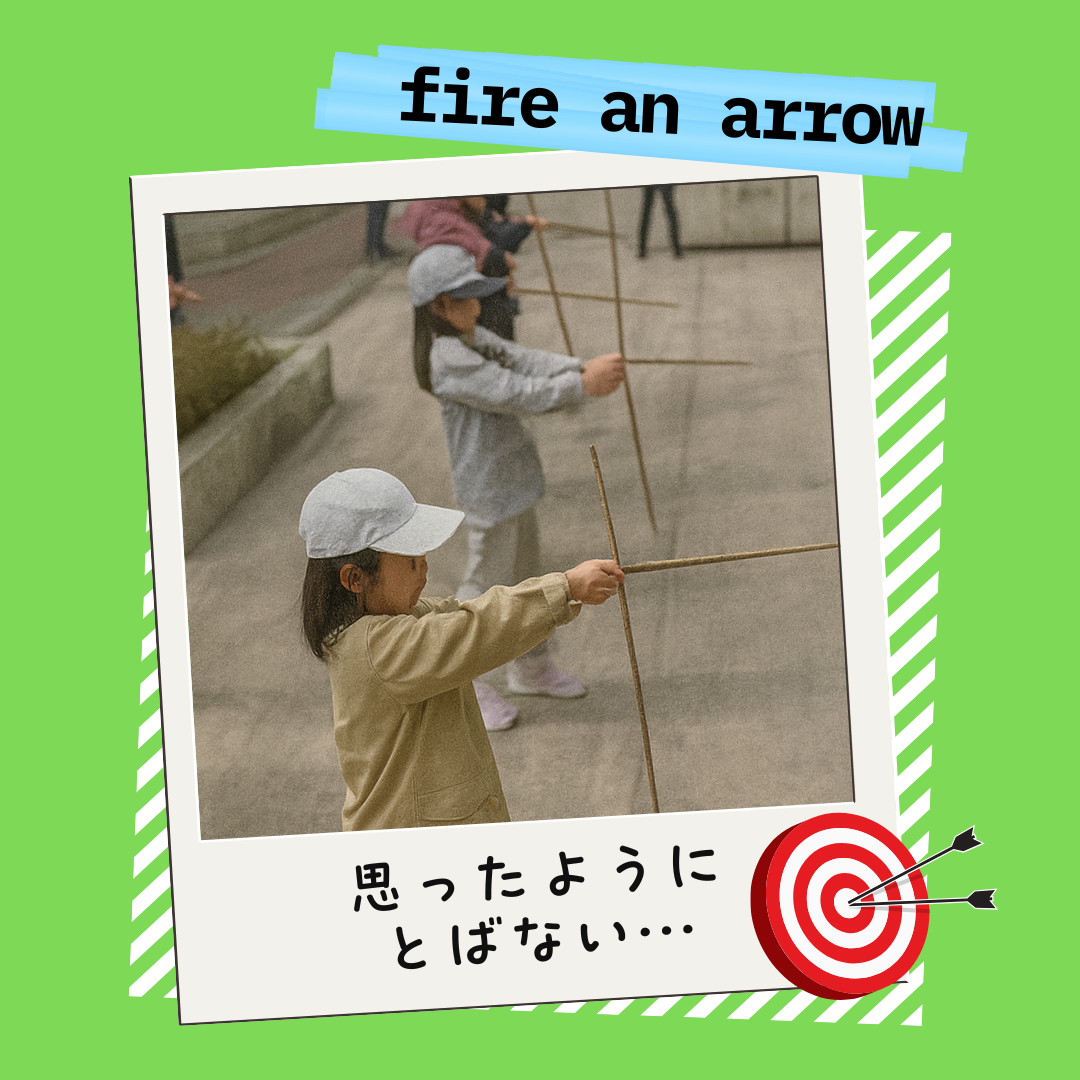
今回、私たちが実施しているプログラムは、子どもたちが自然や文化を探検しながら学ぶキッズたんけんだんの活動のひとつ。
その中でも、知的好奇心を育み、国際交流ができる1泊2日の体験型プログラムを「キッズアカデミア事業」と呼んでいます。
This program is part of Kids Ranger, where children explore nature and culture through hands-on learning.
Among these activities, the Kids Academia program is a special two-day experience designed to nurture curiosity and encourage international exchange.
「うまくいかない」が、考える力を育てる
“It didn’t work!”—and that’s where thinking begins.
「どうしたら、もっと遠くに飛ぶかな?」
今回のアカデミアプログラムでは、竹を削ってオリジナルの弓矢をつくりました。
はじめは思い通りにいかず、弦が切れてしまったり、硬すぎて飛ばなかったり…。
でも、そこで終わりではありません。
「こうすればいいんじゃない?」と友だちに相談したり、形や太さを変えて試してみたり。
失敗を繰り返しながら、子どもたちの顔はどんどん真剣に、そして楽しそうになっていきました。
“How can I make it fly farther?”
In this Kids Academia program, children carved bamboo to create their very own bows and arrows.
At first, things didn’t go as planned—strings snapped, and the arrows were too stiff to fly.
But that wasn’t the end.
They asked friends for ideas, adjusted the shapes and thickness, and kept experimenting.
Through each little failure, their faces grew more focused—and more joyful.
自由に作るからこそ、自分なりの工夫が生まれる。
そんな生き生きとした学びの時間がありました。
Because they were free to create, each child discovered their own way.
It was a truly lively moment of learning.
次回は、チームで挑む山探検と“矢”探しの物語をお届けします。
Next time, we’ll share the story of a team challenge—exploring the forest in search of the perfect “arrow.”

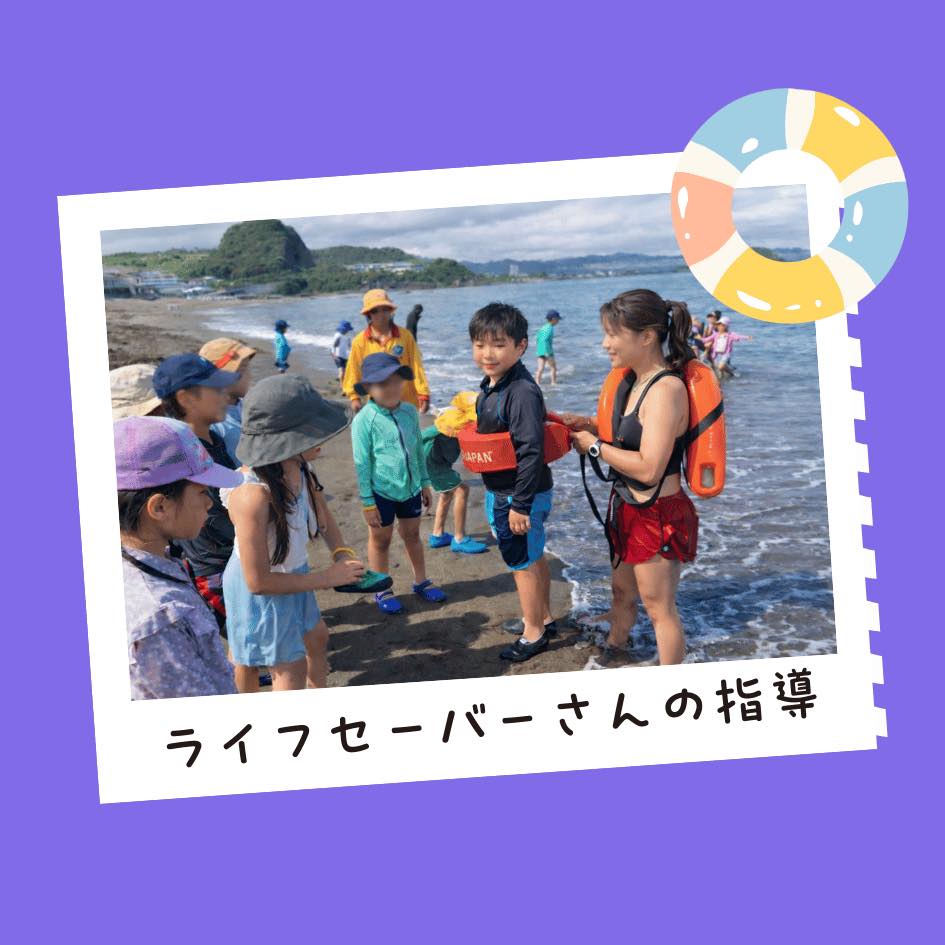
ビーチ ②
たくさん遊んだあと、
こどもたちは砂浜に立っている
色のついた旗に目を向けました。
「これ、なに?」
「見たことあるけど…」
いつもは通りすぎていた旗が、
この日は、少しちがって見えました。
After plenty of playtime,
the children noticed
the colored flags standing on the beach.
“What’s that?”
“I’ve seen it before, but…”
The flags they usually walked past
looked a little different that day.
この旗は、ビーチフラッグと呼ばれています。
海のようすに合わせて、
「今日はどんな海か」を
色で伝えてくれるサインです。
These flags are called beach flags.
They show the condition of the sea
using colors,
helping people understand
what the ocean is like that day.
日本の多くの海水浴場では、
主に3つの色のビーチフラッグが使われています。
赤い旗
黄色い旗
緑の旗
ここで、こどもたちにクイズです。
「この中で、いちばんあぶない海をあらわしているのは、どれでしょう?」
こどもたちは、
旗を見比べながら、
「うーん…」と考えはじめました。
English (Quiz Version – Replacement)
At many beaches in Japan,
three main colors of beach flags are used.
Red
Yellow
Green
Here comes a question for the children.
“Which color shows the most dangerous sea?”
Looking at the flags,
the children began to think,
“Hmmm…”
赤い旗は、
「今日はとても危険」というサイン。
黄色い旗は、
「気をつけながらなら大丈夫」。
緑の旗は、
「比較的おだやかな海」。
色を見るだけで、
大切なヒントがわかります。
A red flag means,
“The sea is very dangerous today.”
A yellow flag means,
“Be careful, but it may be okay.”
A green flag means,
“The sea is relatively calm.”
Just by looking at the colors,
you can get important clues.
でも、キッズアカデミアでは
「色を覚えること」だけを
目的にはしていません。
「なんで今日はこの色なんだろう?」
「風は? 波は?」
旗をきっかけに、
海をよく見ることを大切にしています。
At Kids Academia,
the goal is not just
to memorize the colors.
We ask questions like,
“Why is it this color today?”
“What about the wind? The waves?”
The flags help children
look more closely at the sea.
海は、毎日ちがう顔をしています。
同じ場所でも、
昨日と今日では、まったくちがう。
だからこそ、
遊ぶ前に、サインを見る。
The sea shows a different face every day.
Even in the same place,
yesterday and today can be completely different.
That’s why
checking the signs before playing matters.
この日、こどもたちは
「今日はどうする?」
「ここなら大丈夫かな?」
自分で考え、話し合い、
行動を選んでいました。
That day, the children asked,
“What should we do today?”
“Is it safe here?”
They thought, talked together,
and chose how to act.
すると、こんな声もあがりました。
「外国の海にも、
同じ旗があるのかな?」
その問いが、
次のたんけんへと
つながっていきます。
Then someone asked,
“Do beaches in other countries
have the same flags?”
That question
became the doorway
to the next exploration.
日本のビーチフラッグは、
海と仲よくなるための
やさしいサイン。
次は、
世界の海に目を向けてみます。
Beach flags in Japan
are gentle signs
that help us get along with the sea.
Next,
we’ll look at beaches around the world.
